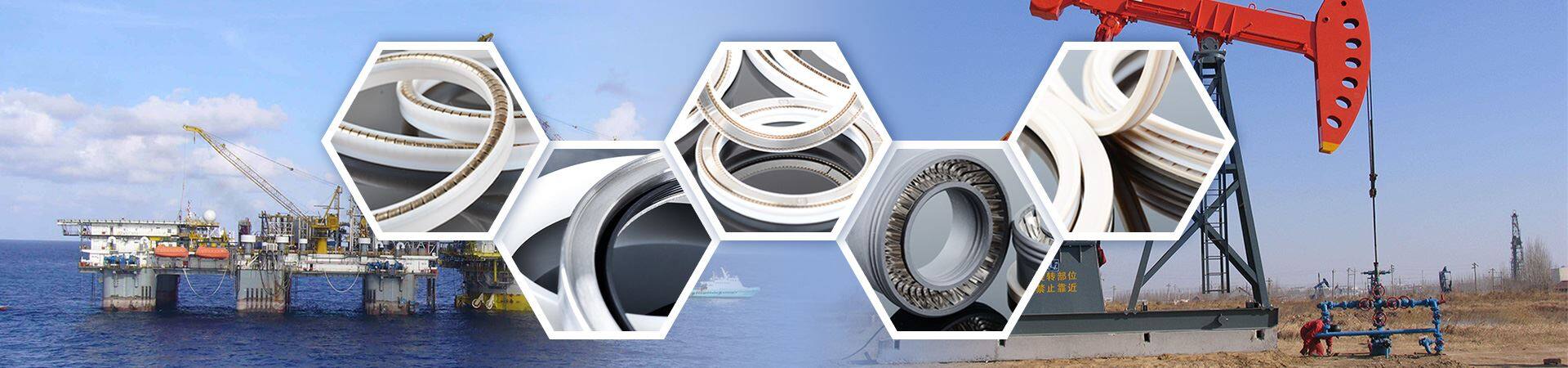
Sealing materials
Material Overview
Thermoplastic Elastomers
Elastomers
Thermoplastics


| Thermoplastic Elastomers Example: TPE-U
TPE-U (Polyurethane Elastomers)
PROPERTIES: Polyurethane elastomers have the characteristic elastic qualities of rubber within certain temperature limits wide-ranging possibilities in the moulding process due to various types of polyurethane compounds Swelling characteristics in water, fats, oils and solvents can be greatly influenced by the structure and number of so-called soft segments distinctive for their higher wear resistance compared to other elastomer materials good low temperature behaviour (special polyurethane) resistance to hydrolysis and ageing
APPLICATION: suitable for the manufacture of high-quality sealing elements for almost all mineral based hydraulic fluids | Elastomere Example: NBR
NBR (Nitrile Butadiene Rubber)
PROPERTIES: NBR is a classical synthetic elastomer can be tailored to the specific requirements of the sealing technology as a result of suitable additives very good compression set temperature range: -45° C up to + 120° C
APPLICATION: suitable for standard hydraulic fluids based on mineral oil, for oil-water and water-oil emulsions as well as water-glycol fluids |


Thermoplastics
PTFE (Polytetrafluoroethylene)
PROPERTIES : PTFE is a fluoroplastic with excellent chemical, thermal, electrical and tribological properties and behaves partly as a thermoplastic. highly viscous in the melt and can be processed by injection moulding using specific press and sinter technologies. PTFE derivates like PFA and FEP, however, can be processed by injection moulding. PTFE and PFA fluoroplastics have the highest resistance to chemicals of all plastics due to the strong carbon-fluorine bond in the molecular chain.low coefficient of friction under both static and dynamic conditions prevents stick-slip behaviour extremely low absorption of water and general resistance to almost all fluids temperature range: its ability to resist extreme temperatures in the high and low temperature range is superior to most other plastics.
APPLICATION: Reinforced compounds are used mainly in order to increase the load factor of PTFE-pure. They have a considerably better behaviour against wear and pressure load with low coefficient of friction. | Thermoplastics Example: POM
POM (Polyoxymethylene)
PROPERTIES: POM is a thermoplastic material Components made of POM have excellent wear and sliding characteristics, particularly in the dry-running range of the bearing elements The material is tough and maintains good stability of shape at different temperatures High resistance to various fluids with low water absorption due to its chemical structure |


OTHER MATERIALS:
In addition to the materials preciously mentioned, other standard or specifically modified trade
plastics (PEEK, UHMW-PE, etc.), processed and machined as necessary, are also used for special
applications.